A village, a thousand stories

Places not to be missed

Paragliding and hang gliding
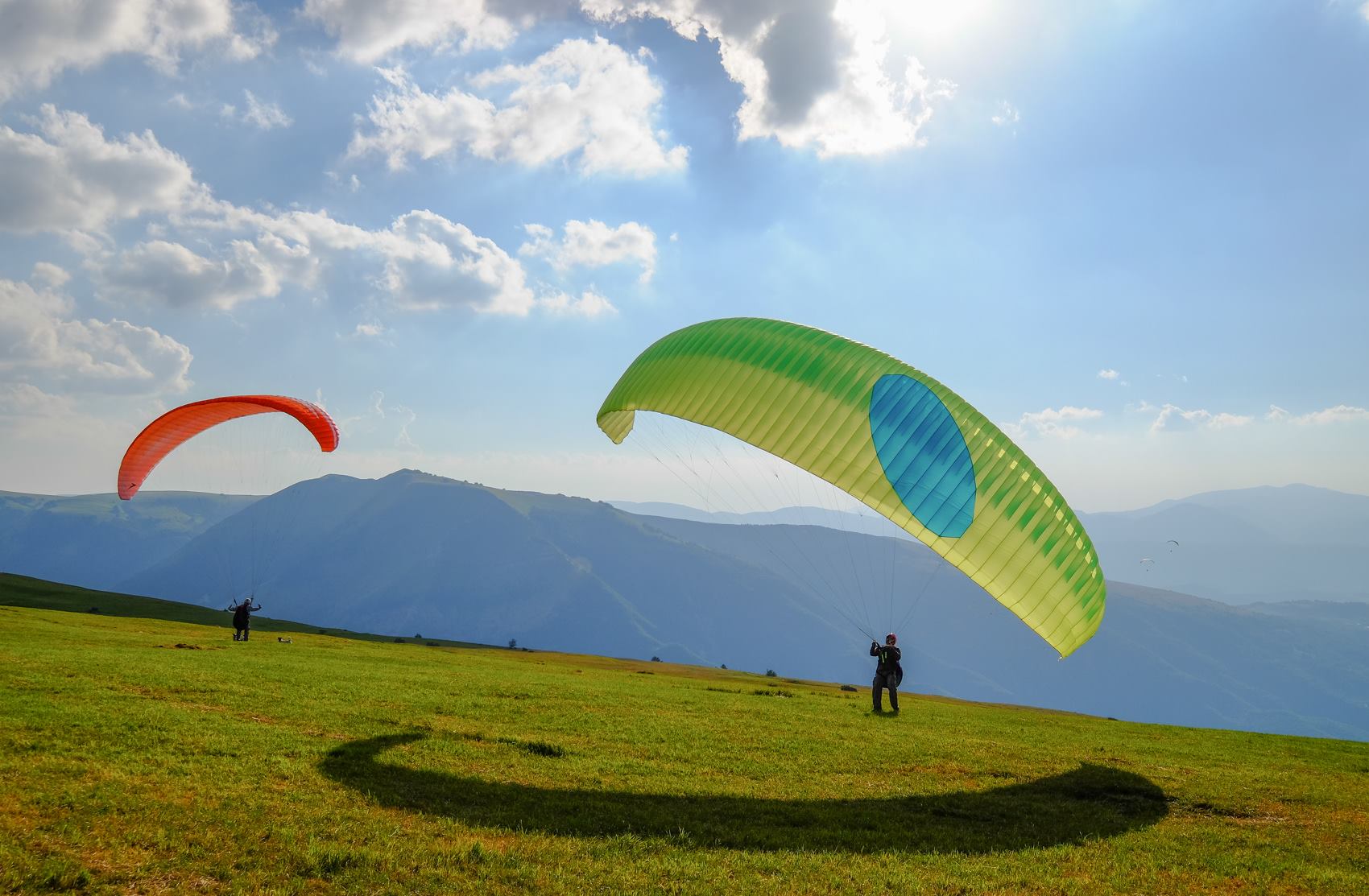
There is an unusual way to get to know Sarnano: looking at it from above. Imagine gliding over the terracotta rooftops, tracing the course of the Tennacola with your eyes and letting your gaze stretch all the way to the sea, while beneath you forests, fields and timeless villages slowly drift by. Flying here, between the Sibillini and the Adriatic coast, is not just about adrenaline: it is a form of wonder. In Sarnano there is one of the most highly regarded flying sites in Italy: 40 kilometres of landscapes shaped by the wind, ideal both for first-time flyers and experienced pilots. You can take off almost all year round, thanks to favourable aerological conditions in both summer and winter, and choose between a simple tandem flight with an instructor or a complete training course. This is home to the Aeroclub dei Sibillini, the first flying school in the Marche and one of the first in Italy. It offers courses in paragliding, hang-gliding and tandem flights, as well as scenic flights that last just long enough to leave you breathless. No prior experience or technical preparation is needed: all you need is the desire to try and a pair of closed shoes. They provide the equipment, along with that spark of enthusiasm you only find in places where people truly dare to dream. It is worth trying at least once, if only to be able to say you have seen the Sibillini the way an eagle would.

Tappa del Cammino Francescano della Marca (da Sarnano a Comunanza)
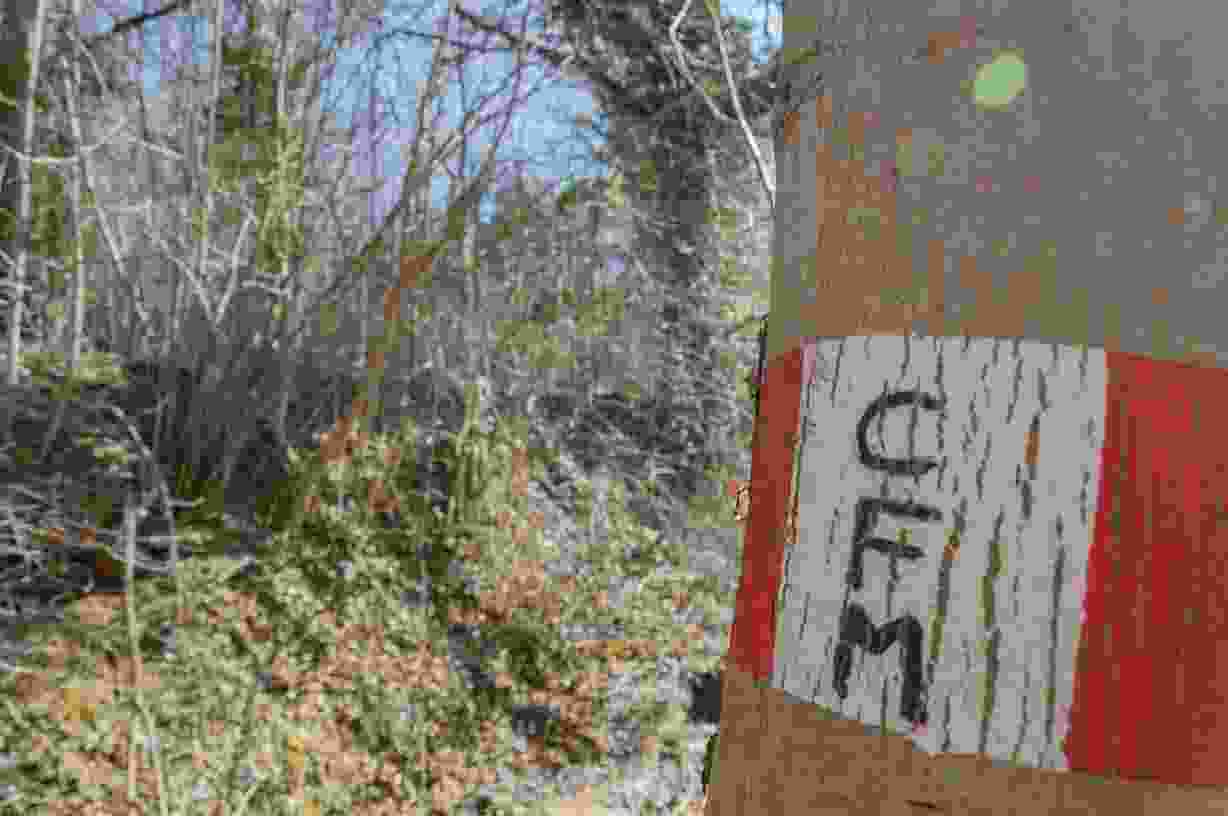
Walking the stretch of the Franciscan Route of the Marca that passes through Sarnano means entering a land that shares far more than a simple memory with San Francesco. The Franciscan Route of the Marca links Assisi to Ascoli Piceno along a 170 km route that crosses 2 regions, 4 provinces, 17 municipalities and 4 national parks. Here in Sarnano the bond with Franciscan spirituality runs deep, visible in the municipal coat of arms bearing the Serafino – the angel who appeared to the Saint at the moment of the stigmata – and in the tales of the “I Fioretti di San Francesco”, which recount his presence at the Eremo di Soffiano and in the convent of Roccabruna. The section that leads from Sarnano to Comunanza is a journey through history, paced by the slow steps of the traveller. It starts from Piazza della Libertà and descends towards the Tennacola river, passing through the localities of Morelli and Grassetti, where the woods guard the ancient sentiero dei Mercatali. Today it is a mule track but, in medieval times, it was a busy route for merchants and traders linking the inland areas with the major trade routes. Further on, the path meets a genuine Roman road, with sections of paving still intact: a stone corridor immersed in greenery, which once connected the via Salaria with the ager gallicus, the area corresponding today to Senigallia. These are tangible traces of a distant past, preserved by time and hidden from the hurried eye. After a few kilometres you reach Amandola and, once you have crossed Piazza Risorgimento, you come to the banks of the Tenna river; here the path requires you to pass by an old mill and a Romanesque humpback bridge, which allows you to cross the river. From this point, a path leads into the vegetation and crosses the Vetemastro stream via another ancient Roman bridge, concealed among the branches. The ascent that follows brings you to the church of Madonna delle Grazie, one of the most intimate places along the route. A little further on, you pass through the hamlets of Salvi and San Pietro in Castagna. The trail continues to climb along ridges and secondary roads, offering glimpses over the valleys below, until Comunanza finally comes into view in the distance. It is a journey woven from memory, landscape and silence. And with every step, Sarnano remains in the traveller’s heart as a stage that brings together beauty and depth. • Length: 22.3 km • Elevation gain: 650 m • Walking time: 7–8 hours • Difficulty: Tourist – Hiking level

Abbey of San Biagio di Piobbico
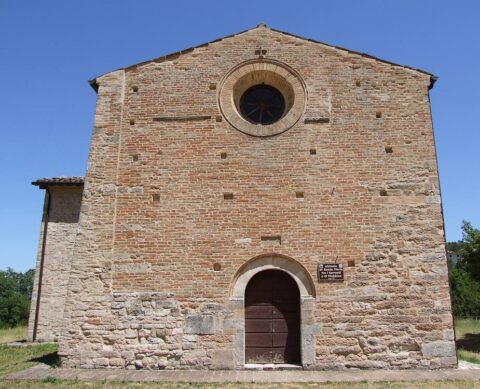
A witness to Sarnano’s architectural and religious past, the Abbey of San Biagio, originally known as Santa Maria inter rivora, rises between the Tennacola river and a small stream that flows at the foot of Piobbico. The origins of this complex go back to a donation by Count Mainardo to three clerics at the beginning of the eleventh century. To be more precise, the year of its actual foundation is recorded by a Sarnano notary who, in the sixteenth century, noted 1030 as the year in which “abbatie publicae fuit fondata”. This monastic institution, which over time held numerous properties not only in Sarnano but also in San Ginesio, Mogliano, Loro Piceno and Montolmo (now Corridonia), saw its authority wane in the thirteenth century in the face of the steady growth of the emerging comuni. After ceding land to Sarnano, the monks were able to establish in the town’s castrum a building that would represent the abbey: the church of “Santa Maria intra moenia” (or di Piazza Alta). As time went by, the abbey fell into disuse, due both to the gradual transfer of the monks to the newly founded town church and, later, following the change of dedication to San Biagio in the fifteenth century. After two papal bulls were issued by Pope Sixtus V at the end of the sixteenth century, the abbey was definitively suppressed and its property incorporated into the Chapter of Montalto. From an architectural point of view, the monastic complex presumably stands on an earlier pre-Roman structure, a place of worship dedicated to the Italic goddess Feronia, goddess of waters and fertility. The present church, oriented east–west, has a rectangular apse with a raised presbytery that allows space for a tripartite crypt beneath. The original structure, however, was of a different kind: the initial layout featured three naves with transept and presbytery, and an adjoining monastery organised around a cloister. The building was constructed making extensive use of scaglia rossa, a local limestone to which brick was later added. The jamb of the entrance door bears the following inscription: “MI 17 AD K D APRILE” (1117 at the calends of April), referring to the year in which the church was markedly altered, being reduced in depth and stripped of its narthex. At that time, the richly decorated building contained a painted cycle known as the Gospel of the Infancy, with the Annunciation, the Nativity and the Adoration of the Magi, attributed to the so-called Maestro di Piobbico, active between 1456 and 1464. He is also responsible for other frescoes in the nave and presbytery. The abbey was further enriched by other painters linked to the Camerte and Folignate schools, who helped create a harmonious decorative ensemble representative of Apennine art between the fifteenth and sixteenth centuries. Geolocation: https://maps.app.goo.gl/X3EP6i4Y3gMQFDtt5
Chiesa di Santa Maria delle Grazie
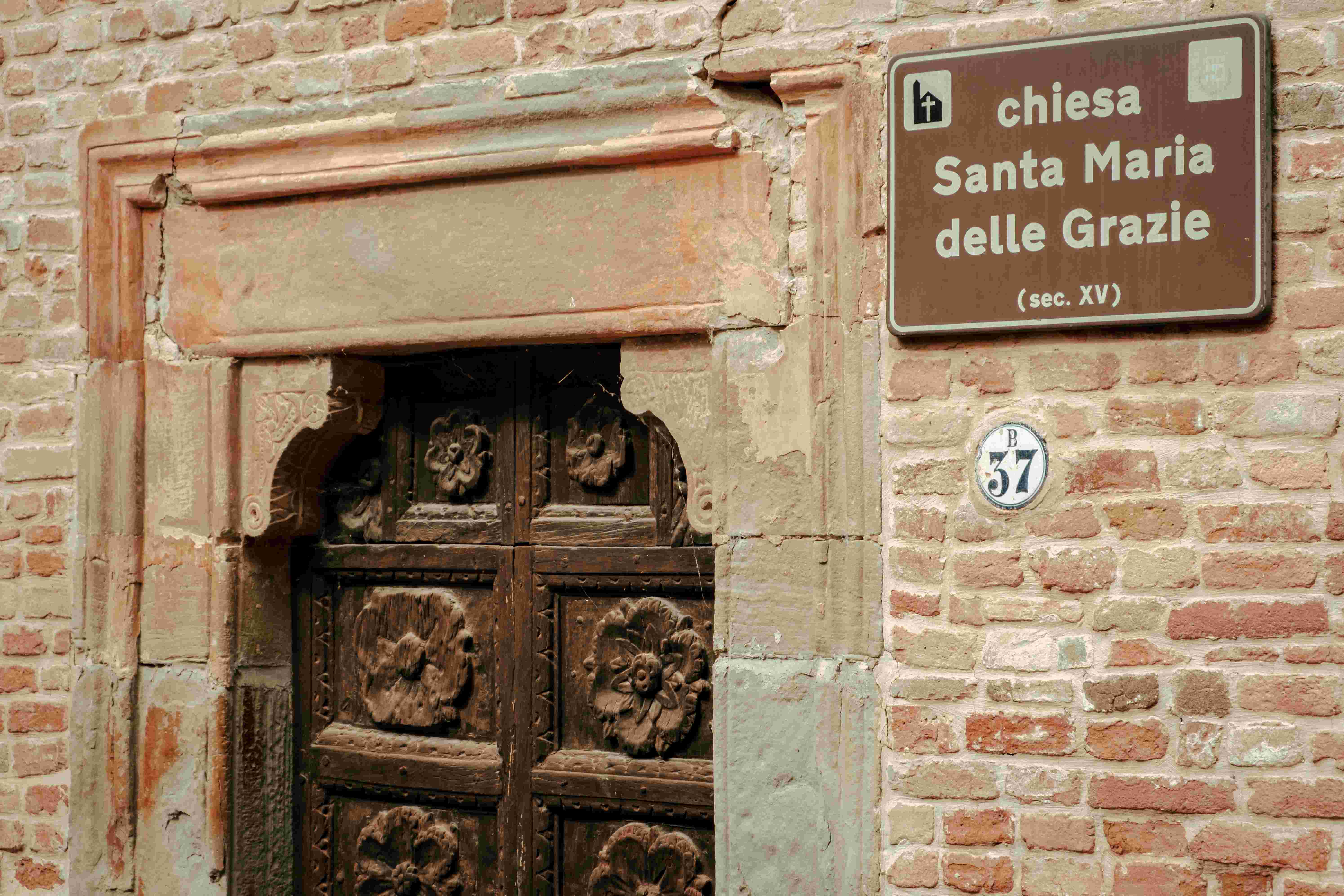
The Church of Santa Maria delle Grazie stands just outside the historic centre of Sarnano and is one of the oldest and most significant religious buildings in the area. It was built around the mid-fifteenth century, leaning against an earlier votive shrine, as was often the case for places of worship that grew out of long-established popular devotion. Belonging to the Municipality from its very origins – as evidenced by the ancient civic coat of arms carved on the entrance portal – the church was governed by precise regulations within the municipal statutes and, over the centuries, underwent numerous interventions thanks to testamentary bequests that helped to enlarge and embellish its spaces. Until 1653 it was entrusted to the Padri Gerolamini, after which it passed to the Curia and in particular to the Seminario di Camerino. It only became private property in the nineteenth century, marking a turning point in its management and use. The interior preserves a cycle of frescoes of great historical and artistic value, dating from between the fifteenth and seventeenth centuries, which offer an insightful cross-section of the sacred art of the area. But one detail in particular captures the attention: some bas-reliefs from 1494 depicting symbols and motifs directly connected with the discovery of America, which had taken place only two years earlier. A striking reference, showing how even in a small Apennine village the great transformations of world history were echoed almost in real time. Santa Maria delle Grazie is therefore a place that brings together spirituality, art and civic memory, revealing through every detail the deep bond between the community and its heritage

Public swimming pool
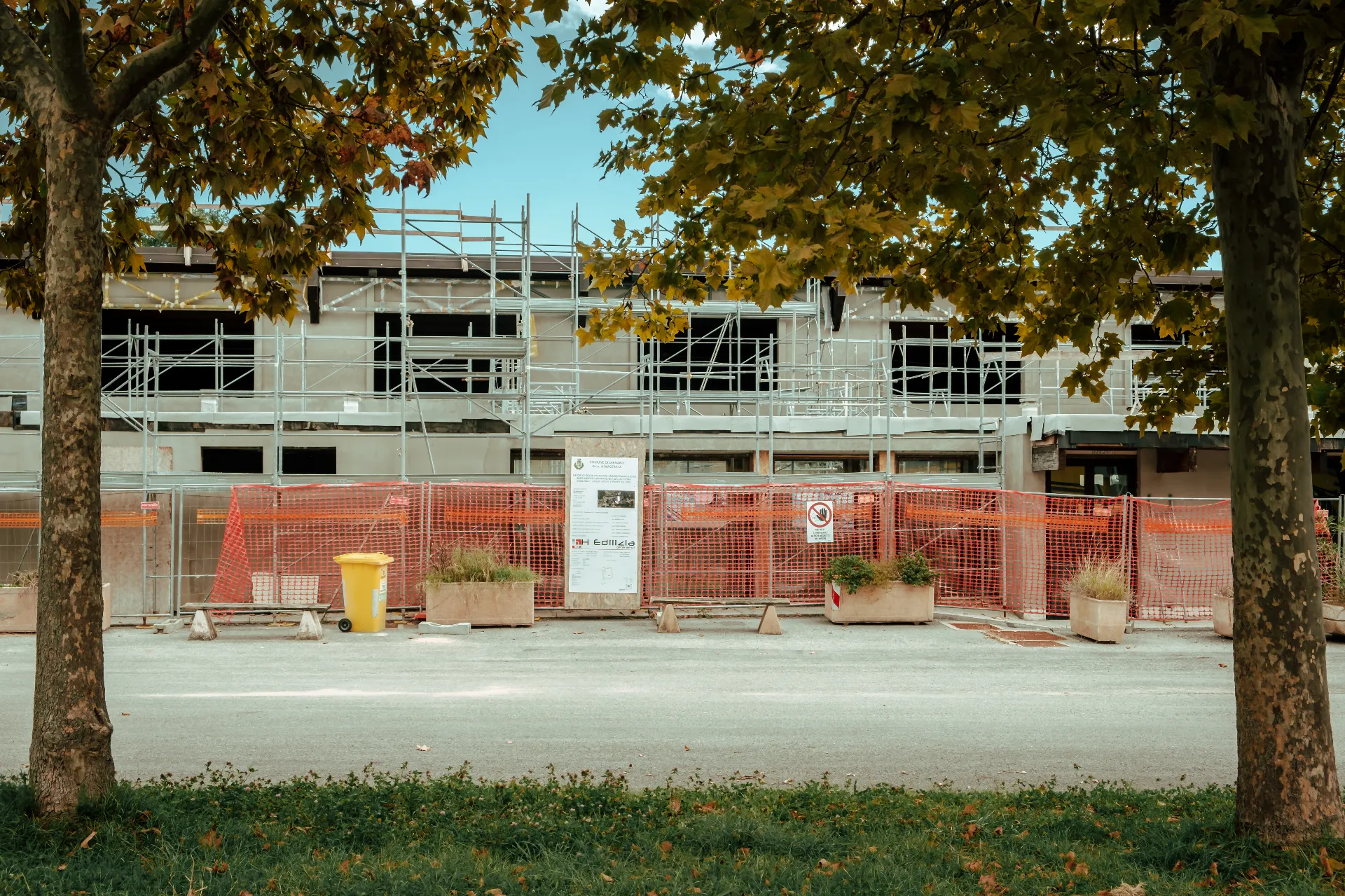
Just a short walk from the centre of Sarnano, along Via Ludovico Scarfiotti, there is an unexpected place where water takes centre stage: the public swimming pool. Completely renovated in 2012, it has become a point of reference not only for residents but also for those spending a holiday in the village. The complex consists of two pools: a main one measuring 25 x 12.5 metres, with a variable depth from 1.20 to 1.50 m, ideal for free swimming, courses and sports activities; and a smaller one designed for children, measuring 12.5 x 6 metres and just 60 cm deep, where little ones can get used to the water in complete safety. Throughout the year and during the summer months, the pool hosts a well-organised swimming school for all ages and levels, with qualified instructors ready to support each participant. But it is not just about swimming: the centre also offers a rich programme of water fitness activities – from Aquagym to Hydrobike, via Aqua Jump, Aqua Box and Aqua Gag – combining exercise with the energy of music. For those who prefer to swim independently, free swimming is available every day, at several different times. It is an opportunity to take an active, regenerating break, immersed in the water with a view of the mountains. For further information, visit the social page https://www.facebook.com/p/Piscina-Comunale-Sarnano-ASD-539-100063453890549/; phone +39 0733 657679; email: asds539sarnano@gmail.com; address: Via Scarfiotti, Sarnano. At present the facility is not open to the public, as it is undergoing energy-efficiency upgrades and plant modernisation. (work scheduled for completion in spring 2026)